





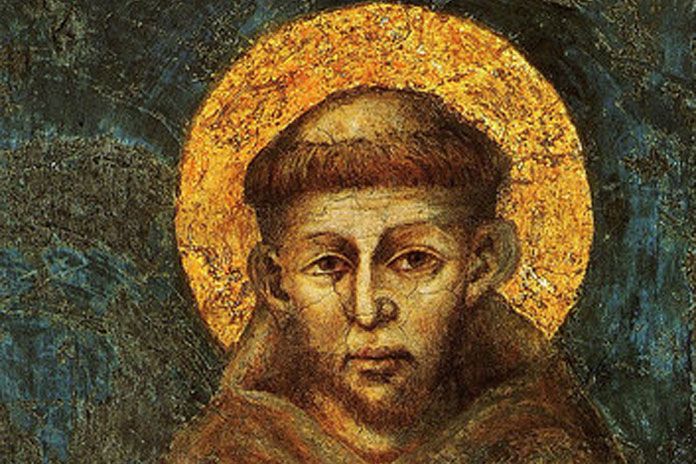
When we pray for the salvation of the world, what words do we use? In the face of global conflict, personal turmoil, and widespread despair, humanity constantly seeks a path to peace. We present you with a powerful, centuries-old invocation that has helped countless people navigate difficult situations and find their way out of darkness: the “Peace Prayer,” often attributed to the beloved Italian mystic, Saint Francis of Assisi.
The prayer’s spirit perfectly embodies St. Francis life and message. It stands as a timeless challenge, echoing the biblical call to “let your light shine before others, that they may see your good deeds and glorify your Father in heaven” (Matthew 5:16).
St. Francis of Assisi Prayer
Lord, make me an instrument of your peace.
Where there is hatred, let me bring love.
Where there is offense, let me bring pardon.
Where there is discord, let me bring union.
Where there is error, let me bring truth.
Where there is doubt, let me bring faith.
Where there is despair, let me bring hope.
Where there is darkness, let me bring your light.
Where there is sadness, let me bring joy.
O Master, let me not seek as much
to be consoled as to console,
to be understood as to understand,
to be loved as to love,
for it is in giving that one receives,
it is in self-forgetting that one finds,
it is in pardoning that one is pardoned,
it is in dying that one is raised to eternal life.
“Make Me an Instrument of Your Peace”
In all the travails and trials of the world, the word most desired and yet most elusive is peace. The opening line of this prayer is a profound commitment, a serious undertaking. To request to be an instrument of peace is not an overreach; it’s a quest for a wisdom and grace on par with King Solomon’s famous request.
Just as Solomon asked for wisdom instead of riches and received both, the request to be an instrument of peace naturally attracts its purest accompaniment: unquenchable love.
The prayer’s power lies in its active nature—it shifts the focus from passively receiving help to actively becoming the solution for the world’s most pressing problems.
Transforming Darkness into Light
The middle stanzas offer a roadmap for this active pursuit of peace, one quality at a time:
- Where there is hatred, let me bring love. To sow love where hatred has taken root is an exceptional gift. While “hurt people hurt people,” this stanza inspires even the injured party to find a place of peace, refusing to perpetuate the cycle of pain.
- Where there is offense, let me bring pardon. We often confuse pardon with weakness. However, to forgive is a form of self-release. It stops the need to carry another person’s extrapolated poison—their injuries—into your own future. Without pardon, the injury passes on, trapping the recipient in a vicious cycle of continuous pain. Forgiveness is not for the guilty, but for the self.
- Where there is doubt, let me bring faith, and Where there is despair, let me bring hope. The prayer affirms the necessity of action (or “works”) as a symbolic gesture of inner hope. Despair is often a sign of fear. When a person, despite their fear, takes a chance and faces what they dread, it is a statement of elevated hope—hope that the dreaded thing will change or neutralize.
- Where there is darkness, let me bring your light. The desire to become a light in a dark room and a beacon of hope signifies a healthy relationship with the Divine. The darkest pathway, guided by a shining torch, allows others—even those who doubt—to see the goodness they often can’t acknowledge because of their internal hurt and pain. The best living example is often the action itself: shedding light in a dark room and a darkened heart.
The True Secret of Peace
The final stanzas reveal the profound, counter-intuitive secret to achieving the peace we pray for:
- To be consoled as to console, to be loved as to love, to be understood as to understand.
This section asks for the strength to give rather than receive. The prayer flips our natural self-centered inclination on its head, revealing the ultimate truth of spiritual mechanics:
- It is in giving that one receives.
- It is in self-forgetting that one finds.
- It is in pardoning that one is pardoned.
- It is in dying that one is raised to eternal life.
The request is for the Divine Master to give the recipient the supernatural ability to console, to understand, to love, to give, and to pardon. In this act of total self-donation, one is fundamentally “born again” into a new, selfless life.
The St. Francis of Assisi Prayer seeks to show the way out of darkness into light, out of guilt into a peace that surpasses human ability and understanding.
More than a superstition, this prayer is the desire and faith to believe there is always a way to make a way out of no way. It is a declaration that the solution to the world’s travails does not lie in external magic, but in an internal transformation that turns the believer into an active vessel of love and peace.
Related:


